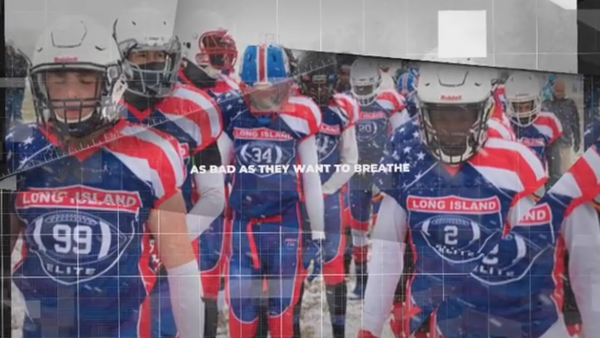
Some trainers on Long Island just throw out cones for kids, put them on the turf, and take their parents money.
Real development is position-specific, body-type specific, and age-appropriate. When those things are ignored, kids don’t just fail to improve, they often
regress.
Examples of Bad or Misguided Training
1. Big, overweight linemen doing only heavy strength work
Endless benching, squatting, and sled pushes
No emphasis on footwork, balance, ankle mobility, hip flexibility, or first-step quickness
Result: kids get stronger but stay slow, heavy, stiff, and unplayable
at higher levels
Linemen don’t fail because they’re weak—they fail because they can’t move.
2. Linemen running skill-position agility ladders meant for receivers
Fancy ladder drills with no carryover to real line play
No stance work, no punch timing, no hand placement, no leverage training
Looks flashy on Instagram, does
nothing on Friday night
3. Slow or stiff athletes being trained at the wrong position
Big kids being “trained” as running backs or linebackers when their bodies clearly project to the line
False hope instead of honest evaluation
Parents paying for fantasy instead of development
4. Conditioning without mechanics
Endless suicides, gassers, or cone shuttles
Bear crawls and punishment drills
No teaching of sprint mechanics, posture, arm action, or acceleration angles
Kids get tired—but not faster
5. One-size-fits-all sessions
Same drills for quarterbacks, linemen, receivers, and linebackers
No positional
breakdowns
No correction, no teaching—just movement
6. Speed training that isn’t speed training
“Speed sessions” that never actually clock athletes
Running on treadmills
No resisted starts, no acceleration phases, no max-velocity work
If it isn’t measured, it isn’t trained
7.
Trainers who never coach during drills
Kids running drills without feedback
No cues, no corrections, no accountability
Trainers more concerned with selfies instead of development
A playlist and cones is not coaching
Development isn’t entertainment.
It isn’t social media content.
And it isn’t about how tired a kid looks at the end of a session.
Good training is boring sometimes.
It’s technical. It’s corrective. It’s honest. And it’s uncomfortable—because it tells players what they need, not what they want.
If you ever have questions about whether a trainer, program, or
approach makes sense for your child’s body type and position, ask. We’d rather help guide you than see families spend years chasing the wrong things.
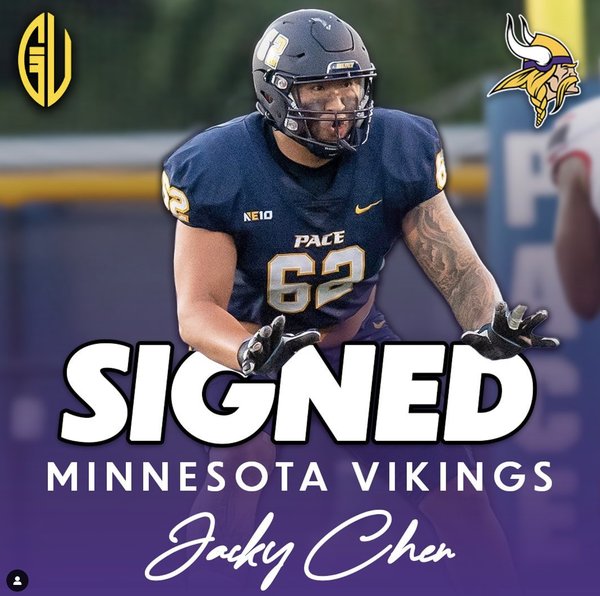
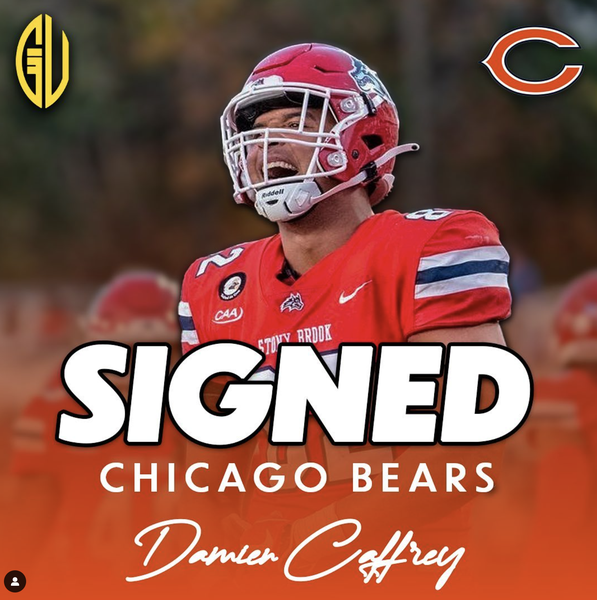
Elite trainers have backgrounds and degrees in exercise physiology and have played or coached at the highest level of college or NFL football. They have a long list of clients at the next level. The proof is in the pudding, not in the social media
posts.
Ask your trainer:
➡️ Do you have a degree in athletic training, exercise physiology, kinesiology, physical education, or a related program?
➡️ Did you play or coach at the highest level of college or NFL football?
➡️ Who's on your client list? Tell me about success stories.
If they can't answer those questions simply and correctly don't waste your time.
A good speed & agility, strength, and position specific program is essential, especially in the off-season, and it can change your trajectory.
If you want to know who to train with ask us and we'll be happy to recommend someone in your area. The list is SHORT.
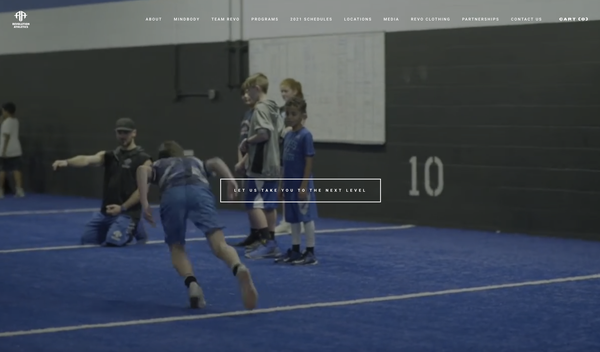
Justin Kull at Revolution Athletics, Golden Ukonu at Peak Performance, James Brady at Elite QB, and Mike Vannucci at Long Island Wide Receiver Academy just to name a few, are proven and established trainers. There are others, just reach out and we'll get you connected
with someone excellent.
Put your son in the hands of and expert, not a moonlighter!